Machine Learning Algorithms Reshaping Sign-Up Reward Distribution in Regulated Markets
Anna Baumann · Nov 21, 2026

Machine Learning Algorithms Reshaping Sign-Up Reward Distribution in Regulated Markets
Regulated markets across gaming and financial services have seen machine learning systems take on larger roles in how sign-up rewards get allocated, with algorithms processing vast datasets to match offers to eligible users while meeting compliance standards. These systems evaluate factors such as user location, device signals, and historical patterns in real time, allowing operators to adjust reward structures without manual intervention. Data from multiple jurisdictions shows adoption rates climbing steadily through 2025, driven by the need to handle increasing volumes of registration attempts alongside stricter oversight.
Core Mechanisms Behind Algorithmic Distribution
Supervised learning models form the backbone of many current implementations, training on labeled datasets that include successful redemptions, fraud attempts, and regional regulatory flags. Unsupervised techniques then cluster users into segments based on behavior signals, enabling platforms to route different reward tiers to distinct groups. Reinforcement learning components test variations in offer terms during live sessions, refining parameters based on conversion metrics that stay within legal boundaries. Observers note that these layered approaches reduce processing times from hours to seconds in high-volume environments, while maintaining audit trails required by oversight bodies.
Integration with Compliance Frameworks
Regulatory requirements in places like Nevada and several Australian states mandate that reward distribution remain transparent and non-discriminatory, which machine learning pipelines address through built-in constraint layers. These layers automatically exclude ineligible regions or age groups before any offer reaches a user, drawing on geofencing data and identity verification feeds. A 2025 report from the Nevada Gaming Control Board highlighted how such automated checks lowered manual review workloads by 40 percent across participating operators. Similar frameworks appear in Canadian provincial systems, where algorithms cross-reference against central exclusion lists updated daily.
What's notable is the way these models incorporate external data streams, including updates from international sanctions lists and local licensing changes, to prevent distribution errors. One documented case involved a European operator that linked its reward engine to real-time feeds from multiple national registries, cutting compliance incidents by integrating the checks directly into the sign-up flow.
Regional Variations in Implementation
North American platforms tend to emphasize fraud prevention within their machine learning stacks, using anomaly detection to flag suspicious registration clusters that might exploit sign-up incentives. In contrast, Asian regulated markets focus more on personalization layers that tailor reward values to local currency fluctuations and payment preferences. European operators often combine both priorities, layering fairness audits on top of the core models to align with broader data protection rules. Research from the University of Sydney's gambling studies unit tracked these differences across 2024 and 2025 datasets, revealing that hybrid systems achieved higher long-term user retention without increasing regulatory flags.
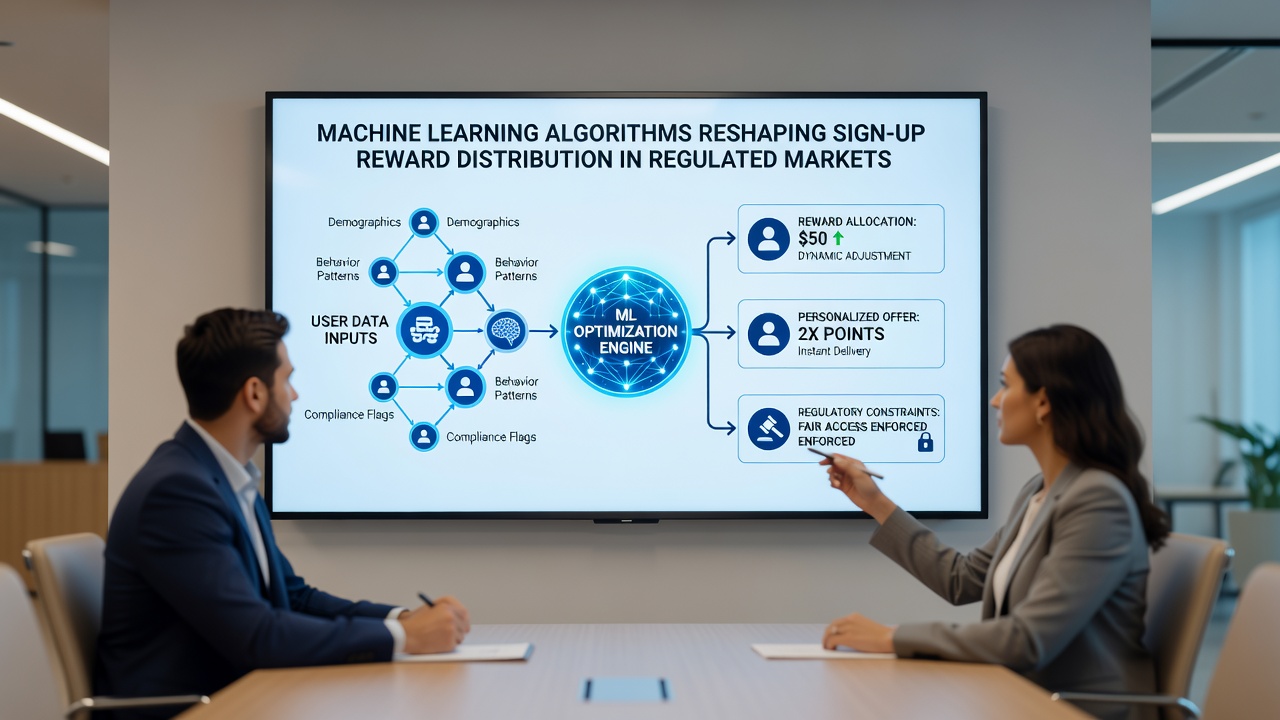
By November 2026, several jurisdictions plan to roll out updated guidelines that explicitly address algorithmic accountability in reward systems, requiring operators to maintain explainability reports for any automated decision that affects bonus eligibility. These forthcoming rules build on existing transparency obligations and are expected to standardize how models document their decision pathways for auditors.
Technical Challenges and Operational Adjustments
Model drift remains a persistent issue, as user behavior patterns shift in response to seasonal events or platform changes, forcing teams to retrain algorithms on fresher data windows. Latency concerns arise during peak registration periods, prompting some operators to deploy edge computing nodes that handle initial filtering closer to the user. Security teams also monitor for adversarial inputs designed to manipulate reward outcomes, incorporating adversarial training techniques into the development cycle. Industry associations such as the European Gaming and Betting Association have published technical briefs outlining best practices for maintaining model integrity under live conditions.
Those who've studied deployment logs report that successful implementations maintain separate validation environments where new model versions undergo regulatory simulation tests before full rollout. This staged approach helps catch edge cases where an algorithm might inadvertently favor one demographic over another due to training data imbalances.
Conclusion
Machine learning continues to influence how regulated markets handle sign-up reward distribution through increasingly sophisticated data pipelines and compliance integrations. As oversight bodies prepare updated standards for November 2026, operators rely on these systems to balance operational efficiency with legal requirements. Ongoing refinements in model governance and regional adaptations suggest the technology will keep evolving alongside regulatory landscapes rather than replacing them.